Deforestation Fueling the Fury of Cloudbursts and Floods in Khyber Pakhtunkhwa

Deforestation Fueling the Fury of Cloudbursts and Floods in Khyber Pakhtunkhwa

Engr. S. Khan

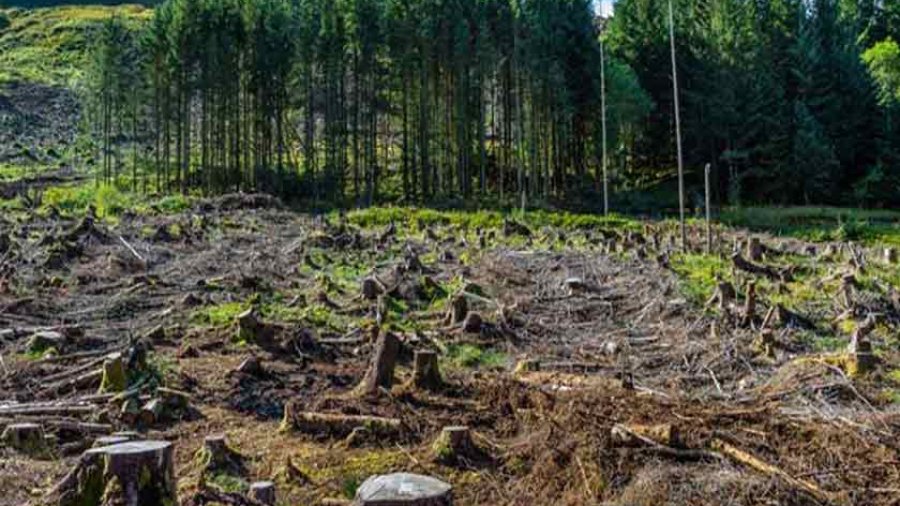
Khyber Pakhtunkhwa (KP), with its valleys, forests, and mountains, has long been Pakistan’s natural shield against climate extremes. Its forests once absorbed torrential rains, stabilized slopes, and regulated river flows. But unchecked deforestation, illegal logging, population pressure, and unsustainable development have stripped the province of this ecological buffer. As tree cover disappears, rainfall that once seeped into the soil now rushes downslope, eroding land, destabilizing mountains, and triggering floods and landslides.

Climate change has worsened the situation. Rising global temperatures have altered South Asia’s monsoon cycle, making rainfall more erratic and intense. In KP’s degraded terrain, this often translates into flash floods, sudden downpours, and landslides that devastate lives and livelihoods.

The August 2025 monsoon disaster revealed how environmental neglect magnifies natural hazards. Districts such as Buner, Swat, Bajaur, Mansehra, Shangla, and Battagram faced catastrophic floods and landslides. Buner was hit hardest, losing up to 300 lives, while province-wide fatalities crossed 340 with hundreds missing. In Swabi, a sudden downpour killed at least 15 people and submerged neighborhoods. Meteorologists explained that overlapping rain systems magnified the downpours—but it was deforestation and weak ecological resilience that turned heavy rains into disaster.

Role of Pakistan Army in Rescue & Rehabilitation

The devastation overwhelmed local authorities, making the Pakistan Army’s role crucial. Using its manpower, logistics, and technical expertise, the Army conducted life-saving operations where civil institutions had collapsed.

Troops, engineers, and medics were deployed within hours to affected districts. Families trapped by collapsed bridges were evacuated with boats and improvised rafts, while specialized teams with sniffer dogs searched for the missing. Army engineers worked with the National Highway Authority to clear blocked roads and erect temporary bridges, restoring access to cut-off valleys.

Field hospitals and camps provided emergency care and vaccinations, while helicopters evacuated the critically injured and delivered supplies to remote areas of Shangla and Swat. Soldiers distributed tents, food, blankets, hygiene kits, and drinking water in coordination with NDMA and PDMA. The Army also secured relief camps and assisted the civil administration in maintaining law and order.

The Chief of Army Staff personally visited the affected areas, pledging sustained Army support for both relief and long-term rehabilitation, including roads, schools, and essential infrastructure.

How Deforestation Amplified the Floods

Although triggered by strong monsoon systems, the floods were magnified by deforestation, which stripped the land of natural defenses. Bare slopes could not absorb rainfall, turning hillsides into torrents that swept away farms, homes, and communities. Without forests to regulate water flow, rivers were overwhelmed within hours. Uprooted vegetation also left terrain unstable, making districts like Swat and Buner prone to landslides.

Experts from the Pakistan Meteorological Department and conservation organizations have directly linked forest loss to the scale of these floods. At a 2023 seminar, SDPI and the Sarhad Conservation Network warned that illegal logging was systematically raising disaster risk despite major projects like the Billion Tree Tsunami. Weak governance and sanctioned timber extractions continue to undermine reforestation efforts.

What Must Be Done

To prevent future tragedies, KP must adopt long-term resilience measures. Afforestation should be expanded in vulnerable catchments with active community involvement, while strict action is needed against illegal logging and poor forest governance.

Disaster preparedness must be strengthened through early warning systems, durable flood defenses, and climate-resilient evacuation routes. Development planning should integrate climate risk assessments to ensure resilient infrastructure. At the same time, community training in watershed management, erosion control, and first-response can empower locals to protect their environment and respond effectively to emergencies.

A Call to Action

The 2025 floods were not only a natural disaster but also a man-made one, intensified by decades of deforestation. While the Pakistan Army saved countless lives through relief operations, such interventions will become routine unless KP restores its ecological defenses.

The loss of forests is no longer just an environmental issue—it is a survival issue. Rebuilding homes and roads is futile if they are washed away each monsoon. The only sustainable way forward is to restore forests, curb deforestation, and strengthen both ecological and human resilience.

Article on Brain Drain from Pakistan

PAKISTAN ISN’T SHORT OF BRAINS — IT’S SHORT OF A PLAN

Dr Bashir Ahmad

Every time a flight takes off from Lahore, Karachi, or Peshawar packed with young Pakistanis, it carries more than just passengers. It carries degrees, ambitions, and dreams. But what happens after landing in Riyadh, Dubai, or London? The harsh truth: those dreams often shrink to the size of a delivery bike, a construction site, or a night shift at a gas station.
This isn’t just a sad story but a national tragedy. Our educated youth, loaded with potential, are stuck in jobs that don’t match their qualifications. An engineer becomes a driver, driving a cab in Dubai. A business graduate waits tables. A computer scientist works as a cashier. IT grad is delivering food in London and that MBA is cleaning tables in Muscat. It’s like taking a Ferrari and making it pull a donkey cart.
The Economic Survey of Pakistan 2024-25 lays it bare: in just one year, more than a million Pakistanis packed their bags and left in search of work. Look closer and you’ll see the quiet desperation behind the numbers. Punjab alone sent over 400,000, Khyber Pakhtunkhwa nearly 187,000, Sindh about 60,000, and even smaller regions like Azad Kashmir and the tribal districts sent close to 30,000 each. These aren’t dry statistics—they’re families hugging sons at airports, mothers wiping tears, and breadwinners whispering promises to return with both money and dignity.
And yes, the money does come back. Remittances keep this country breathing. In FY2024-25, overseas Pakistanis sent home a record $38.3 billion—the highest ever. Just in March 2025, inflows crossed $4.1 billion in a single month. That’s not just money—it’s loyalty, sacrifice, and sweat turned into dollars. But here’s the sting: most of it comes from low-skilled labour. Picture this—if even half of those million workers were placed as doctors in Europe, IT experts in North America, or engineers in the Gulf, the remittances wouldn’t just grow—they’d explode.
The tragedy deepens when you compare Pakistan with other nations. The Philippines, for example, has a robust overseas employment strategy. Their government aligns training programs with global demand, exporting nurses, caregivers, seafarers, and IT specialists to markets where their skills are needed. Result? Higher wages, more dignity, and better remittance flows. India, too, has aggressively positioned itself as an exporter of high-value IT and engineering professionals. Meanwhile, Pakistan is still stuck exporting cheap labor.
Why? Because we treat migration like a gamble, not a strategy. The common advice is: “Beta, bas bahar nikal jao, kuch na kuch ho hi jaye ga.” (“Son, just get abroad, something will work out.”) But that “something” too often means exploitation, underpayment, and frustration. The matter of the fact is is that we failed to create clear pathways, proper training, and targeted policies that would match our youth with opportunities abroad.
The Bureau of Emigration and Overseas Employment (BEOE) reports that in just the first half of 2025, 337,000 Pakistanis left the country for work. Most went to Gulf countries—Saudi Arabia and UAE leading the pack. But the jobs are still overwhelmingly low- or semi-skilled. That’s the skill mismatch: qualified people doing unqualified jobs. It’s not just unfair but a waste of human capital.
This is where it hurts most. Every Pakistani worker abroad is a hero in their own right, sweating blood to keep families afloat back home. But when you see a university graduate driving a taxi, you realize the pain of lost potential. That person could have been building Pakistan’s future. Instead, they’re just surviving in a foreign land.

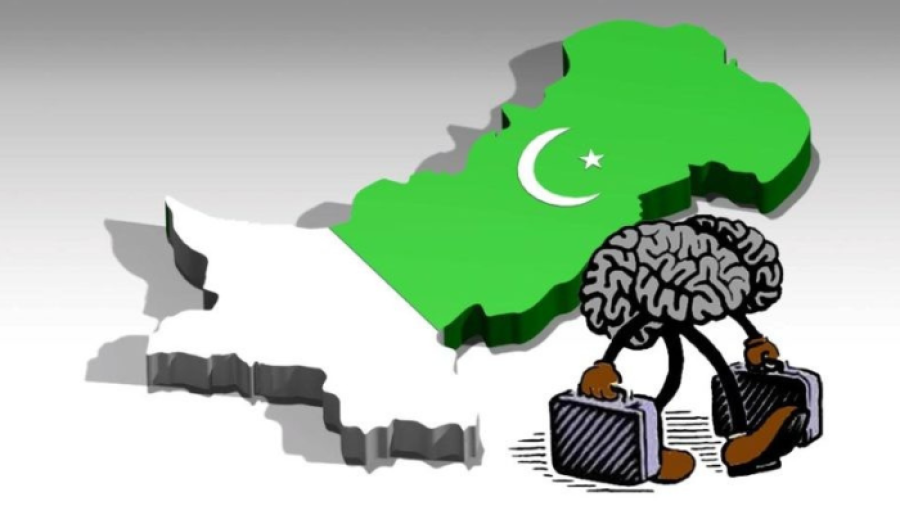
People love to call brain drain a curse, but the economists didn’t always see it that way. The neo-Malthusians argued that when too many people chase too few resources, letting some talent move abroad can actually ease the pressure at home. The Todaro model painted the same picture we see in Pakistan today: smart young graduates sizing up dead-ends here against brighter chances abroad and taking the leap. And then there is Grubel and Scott’s “beneficial brain drain”, advocating the idea that when migration is managed right, the country of origin doesn’t just lose out, it gains through remittances, fresh skills, and new networks. The real tragedy for Pakistan is not that our brightest are leaving, but that they’re leaving without any plan behind them—what should have been brain gain is bleeding out as brain waste.
If we had proper skill development centers, strong counseling, and migration policies linked to foreign labor demands, the story would be different. Instead of a “cheap labor supplier,” Pakistan could emerge as a “knowledge economy exporter.” We could be sending doctors to Germany, IT specialists to Canada, engineers to Saudi Arabia—not just construction workers and drivers.
Yes, remittances are rising, and that’s worth celebrating. But money alone doesn’t tell the full story. What about dignity? What about national reputation? What about turning brain drain into brain gain? If migration is inevitable, and it is, then let’s make it smart. Let’s stop exporting bodies and start exporting brains. Otherwise, our airports will keep filling with dreams that shrink the moment they land.