Ghulam Dastageer
On May 25, 2018, President Mamnoon Hussain repealed the Frontier Crimes Regulations (FCR) through the FATA Interim Governance Regulation (FIGR), a transitional framework to govern FATA until full integration. On May 31, 2018, the 25th Constitutional Amendment was enacted, formally merging FATA with Khyber Pakhtunkhwa. The seven agencies and six FRs became tribal districts under KP’s jurisdiction, marking the end of FATA’s distinct administrative identity.
Seven years after the merger of the FATA with Khyber Pakhtunkhwa through the 25th Constitutional Amendment, large parts of the region still remain in a state of administrative limbo.
While some institutional reforms have taken shape, persistent gaps in judicial access, police coverage, education, health services, and civil bureaucracy continue to undermine the promise of equal citizenship for the people of the newly merged districts.
Judicial Reforms
The colonial-era FCR was formally abolished in 2018, with Political Agents and Assistant Political Agents replaced by Deputy and Assistant Commissioners, respectively. The judicial system was extended in principle, but in practice, most courts remain non-functional.
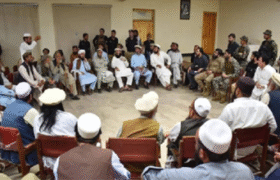
According to the UNDP’s Rule of Law Programme, approximately 229 judges, lawyers, and judicial support staff—one-third of them women—have been trained to operate in the merged districts. Despite this, the absence of operational courtrooms and public access has left traditional jirga systems as the default mechanism for dispute resolution in most areas. In most of the merged districts, the courts just exist in the district headquarters, while there is no presence of courts at the tehsil level.
Policing Infrastructure
Among the more visible reforms post-merger has been the expansion of formal policing. In March 2019, the Khyber Pakhtunkhwa government approved the establishment of 25 police stations across the seven merged districts and six former frontier regions. These included three stations each in Khyber, Mohmand, Kurram, North Waziristan, and South Waziristan. Two each in Bajaur and Orakzai. One each in Darazinda, Jandola, Hassankhel, Dara Adamkhel, Wazir, and Bhittani areas.
 The first fully functional police station in Wana, South Waziristan, was inaugurated in May 2019, marking a symbolic shift in local law enforcement. More recently, on November 7, 2024, five model police stations were launched in Bajaur, Kurram, Mohmand, North Waziristan, and Orakzai. These facilities—equipped with gender-responsive desks, community halls, and modern amenities—were developed with funding from the Government of Japan and implemented by UNDP in partnership with Khyber Pakhtunkhwa police.
The KP government has also retrained and integrated over 2,000 Levy and Khasadar personnel into the provincial police system, who lack the basic know-how of policing. District-level policing plans have reportedly been prepared, though these remain largely undisclosed and unimplemented.
This modest expansion raises serious questions about capacity: Can a region of more than 27,000 square kilometres—plagued by militancy, tribal conflict, and cross-border infiltration—be effectively policed with just 25 stations? By comparison, settled districts in Khyber Pakhtunkhwa often operate with dozens of police stations, supported by supervisory and investigative units.
Civil Administration
With the replacement of Political Agents by deputy commissioners, the civil administrative framework of the merged districts has been brought in line with the rest of Khyber Pakhtunkhwa. Yet, the rollout of provincial governance remains hampered by under-resourced offices, staffing shortages, and frequent budgetary delays. Despite formal restructuring, meaningful provincial integration and service delivery are still struggling to take root. For instance, the office of the Deputy Commissioner of the Khyber tribal district still operates from Peshawar.
Health and Education
According to recent reports, 5,826 State-run schools currently exist in the merged districts—of which 87 per cent are functional, while 775 remain non-functional. Despite this sizable footprint, no new school construction has been officially documented post-merger. This raise concerns that educational access in the region has not meaningfully expanded—only been maintained at best.
The high number of out-of-school children, particularly girls, combined with poor school infrastructure and a lack of trained teachers, suggests that institutional development in education remains stalled at a foundational level.
Seven years into the merger, the reality for residents of the merged districts remains one of unmet expectations. The structural transformation envisioned by the 25th Amendment remains incomplete. Without a substantial boost in institutional capacity, funding, and political will, the promise of integration and equality for the people of the former FATA remains more theoretical than real.
The Way Out
Despite the formal end of FATA’s colonial legacy through constitutional means, a growing number of residents across the merged districts believe that genuine integration remains elusive. Disillusionment with the law-and-order situation is deepening, particularly in Bajaur, North and South Waziristan, and Khyber, where militancy has resurfaced in recent months.
The perception of security rollback, rather than consolidation, has raised fears that the region may once again be subjected to a governance vacuum.
However, any attempt to reinstate the former FATA-like administrative system—even in a limited form—would likely face fierce public opposition. Across tribal districts, there is a growing consensus that reversing the merger would be unacceptable. Movements such as the Pashtun Tahaffuz Movement (PTM) have already mobilised public sit-ins (pasoons) and street protests to defend the hard-earned constitutional gains. Many see these forums as the last resort to resist any backsliding into non-democratic governance.
Among locals, there is a widely held belief that the Pakistan Army is behind the push for administrative reversal, allegedly motivated by control over mineral-rich lands. The slogan “jahan wasail hain, wahan masail hain” (where there are resources, there are problems) is increasingly voiced at public meetings, reflecting a deep mistrust towards the military’s intentions in the region.
If this perception is not addressed, resentment towards the Army could intensify, undermining its standing not just in tribal districts but across the Pashtun belt.
The situation could further deteriorate if the federal government considers introducing a 27th Constitutional Amendment that designates mineral-rich areas as federally administered territories, potentially removing them from provincial jurisdiction.
While such a move might serve fiscal or strategic goals—such as boosting federal revenues or defence allocations amid rising tensions with India—it would severely damage civil-military relations and could ignite a popular backlash, particularly among youth who now wield social media as a potent political and propaganda weapon.
Crucially, the failure lies not with the merger model itself, but with the incomplete implementation of the Sartaj Aziz Committee’s recommendations. For instance, the proposed three per cent share of the NFC Award, meant to fund development in merged districts, has yet to materialise.
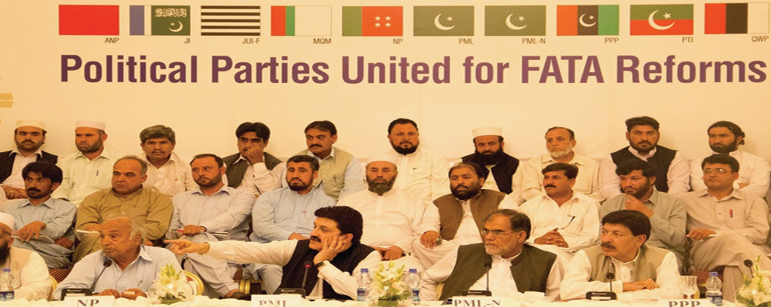
From a political standpoint, any reversal would face stiff resistance in Parliament. The Pakistan Tehreek-e-Insaf (PTI)—now positioned as an anti-establishment party—retains a significant support base in ex-FATA and would likely oppose any constitutional regression.
Similarly, the Pakistan Peoples Party (PPP) has categorically stated that it would not support any rollback of the merger, and its cooperation is essential for achieving the two-thirds parliamentary majority required for constitutional amendments.
At this critical juncture, the only viable way forward is a renewed political consensus that fully honours the original vision of integration. That means operationalising judicial and policing systems at the grassroots, completing infrastructure rollout, ensuring proportional development funding, and most importantly, restoring public trust through transparency and accountability.
Any effort to sidestep these imperatives would not only derail the merger process—it risks reopening wounds that Pakistan has worked so long and hard to heal.