Hassan Sajid
Peace is fundamental prerequisite for a nation’s socio-economic and political growth. Unfortunately, the wave of recent insurgency has once again threatened stability and security of Pakistan, especially of KP. It remains one of the gravest concerns for internal security, as well as socio-economic and political stability of Pakistan, jeopardising the livelihoods of thousands of people and forcing them to abandon their homes and assets across various areas of Khyber Pakhtunkhwa, recently in Bajaur.
TTP and other extremist groups, emboldened by transnational outfits such as Islamic State, continue to operate through Bajaur, challenging the writ of the State and fostering an environment of fear. According to the Global Terrorism Index 2025, Pakistan is currently the world’s second-most terrorism-affected country, after Burkina Faso. Terrorist attacks in Pakistan doubled from 2023 to 2024, rising from 517 to 1,099. These militant groups are seen harassing the locals and receiving a fixed amount of extortion money from small businesses.
In regard to exploring the root cause of terrorism in Pakistan, it can rightly be said that the prevalent resurgence of militancy is not a cause but a consequence of more fundamental structural failures, such as persistent poverty, poor governance, political illiteracy, youth bulges and religious extremism, prevailing across the region, which serves as cultivated ground for the proliferation of terrorism. Bajaur in Erstwhile FATA is the most appropriate examples of such failures. Amnesty International revealed that scores of residents of FATA were being held in detention on suspicion of abetting and providing safe havens to the militants.
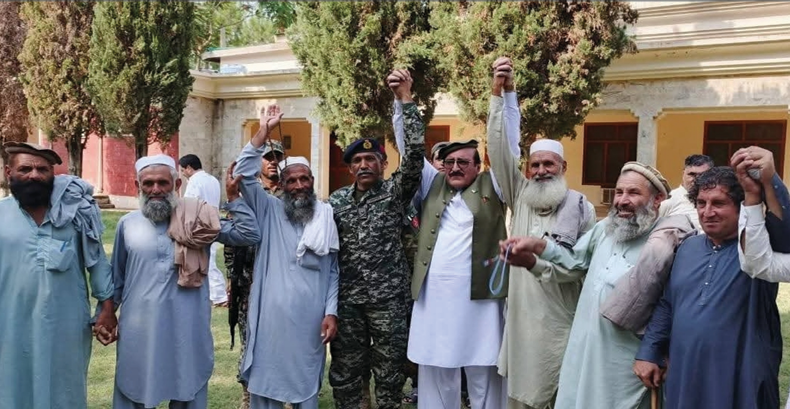 Thus, the recent wave of militancy and the military operation SARBAKAF against it have forced thousands of families into displacement. As the operation continues, the relief and rehabilitation efforts remain vital to heal the wounds of local people, restore national integrity and rebuild hope for socio-economic prosperity. In the same spirit, the Khyber Pakhtunkhwa government and Provencial Disaster Management Authority (PDMA) are providing large-scale emergency relief and cash assistance to the displaced families. For that, the authorities have quickly organised a registration drive through which 50,000 – 75,000 one-time cash grants were provided to meet their immediate needs.
Additionally, camps and temporary shelters were established for the displaced people as the first-line relief mechanism. Government-run camps, notably the Bajaur Sports Complex, plus the vicinity of schools and other government buildings have been used to shelter displaced families while registration and relief distribution are carried out in the meantime. The government and security forces are actively responding to the plight of people, ensuring a prompt disposal of relief and rehab. Similarly; responding to the issue of limited registration centers, Bajaur’s district administration has recently set up another registration point in Utman Khel for affected families and promised to establish more centres on need base.
Moreover, authorities have already returned and rehabilitated families in the cleared areas. As security forces clear localities from militants’ presence and create an environment of peace, authorities have allowed residents to return to their homes. Moreover, they are committed to additional support including a second cash disbursements on their return. Repairment of schools, hospitals and livelihood support to prevent protracted displacement is also part of rehabilitation plan.
Hence, it can rightly be said that the scars of conflict in Bajaur are deep, but they are not beyond healing. Relief and rehabilitation efforts, though challenged by scale and resources, reflect the resilience of the people and the determination of the State’s security forces to restore peace and stability. Through immediate relief, he government and local authorities are laying the foundation for sustainable recovery. Yet, the true test lies not only in the reconstruction of infrastructure but also in the restoration of trust, dignity, and hope among the people. Bajaur’s story is a reminder that peace cannot be secured by military means alone; it must be nurtured through inclusive governance, social justice, and economic opportunities. Only then can the wounds of conflict be healed, not just in Bajaur, but across all regions struggling under the shadow of militancy.