Maaz Khan
This report presents a comprehensive analysis of governance in Khyber Pakhtunkhwa (KP) under the Pakistan Tehreek-e-Insaf (PTI) provincial government during the 2025 calendar year.
Based on a synthesis of official data, public opinion surveys and independent research, the analysis reveals a province caught in a significant paradox. While the administration claims fiscal prudence and record budget surpluses, these metrics stand in stark contrast to widespread public dissatisfaction over unemployment, security and the decay of essential services.
The year 2025 has been defined by profound political instability, most notably the removal of Chief Minister Ali Amin Gandapur in October, which was driven by internal party strife and a catastrophic security crisis. The provincial government’s strategy has heavily prioritised national-level political agitation and confrontation with federal institutions, an approach that surveys indicate is at odds with the public’s desire for cooperative governance and local problem-solving. This focus has come at a steep cost: critical sectors like education and health are in a state of systemic failure, the integration of the former FATA regions remains largely unfulfilled, and KP has solidified its status as the epicentre of terrorist violence in Pakistan. The report concludes that governance in KP has been a casualty of politicisation, resulting in administrative paralysis and a growing disconnect between official rhetoric and the lived reality of its citizens.
The Fiscal-Public Perception Gulf
The PTI-led government’s first full year following the 2024 elections has been characterised by a stark dissonance between its declared financial achievements and ground-level public sentiment.
Official Claims of Fiscal and Administrative Success
The government’s narrative centres on exceptional fiscal management. Key proclaimed achievements include a 49 per cent surge in provincial revenue during the first half of 2025, attributed to improved collection mechanisms (The Nation, 2025). This contributed to a record budget surplus of Rs.169 billion for the first six months of FY2025, vastly exceeding its Rs.100 billion target (The Nation, 2025). The subsequent budget for FY2025-26 was set at a historic Rs. 2.1 trillion, featuring substantial proposed increases for education (Rs. 420 billion) and health (Rs. 275 billion), including an expansion of the Sehat Card Plus programme (Dawn, 2025). Legislative efforts such as the Digital Payments Act 2025 were promoted as tools to enhance transparency and curb corruption (The Express Tribune, 2025).
Widespread Public Dissatisfaction and Socio-Economic Grievances
In stark contrast, empirical surveys reveal deep public disillusionment. A comprehensive Gallup Pakistan poll (Feb-Mar 2025) of 3,000 respondents found that only 43 per cent of citizens reported new road projects under the current administration, which is a significant drop from 59 per cent during PTI’s previous tenure (Gallup Pakistan, 2025). Merely 37 per cent noted improvements in public transport, and only 40 per cent observed any general development. Critically, even among PTI supporters, 49 per cent claimed no recent development in their localities (Gallup Pakistan, 2025).
Economic perceptions are severely negative: 59 per cent of respondents reported rising unemployment, and 67 per cent believed the government had failed to create jobs or business opportunities (Gallup Pakistan, 2025; Arab News, 2025).
Furthermore, 60 per cent of KP residents agreed that the provincial government “wasted time in protests and demonstrations rather than focusing on governance” (Gallup Pakistan, 2025).
The Security and Services Deficit
Security remains a paramount concern, with 57 per cent of residents expressing fear of terrorism, a figure that spikes to 72 per cent in southern districts (Gallup Pakistan, 2025). Access to basic services is severely lacking: 66 per cent of households lack a gas connection and 49 pecent rate electricity access as poor or non-existent (Gallup Pakistan, 2025a). Civic infrastructure for youth is virtually absent, with 77 percent lacking public parks, 81 per cent without libraries and 70 per cent without community centres.
Political Instability and Leadership Change
The most dramatic illustration of governance turmoil in 2025 was the abrupt ouster of Chief Minister Ali Amin Gandapur in October, followed by the installation of Sohail Afridi.
Causes of the Leadership Crisis
Gandapur’s removal was the result of a “perfect storm” of failures (Policy Wire, 2025). The immediate catalyst was a devastating terrorist attack in Orakzai district in October 2025 that killed 11 soldiers, including a lieutenant colonel, which reportedly shattered the confidence of PTI founder Imran Khan in Gandapur’s handling of security (Dawn, 2025). This security collapse was compounded by a public and bitter internal feud between Gandapur and Imran Khan’s sister, Aleema Khan, which polarised the provincial cabinet and diverted administrative focus (Policy Wire, 2025). The government was also heavily criticised for its ineffective response to monsoon floods that caused over 400 deaths (Policy Wire, 2025).
Implications of the Transition
Sohail Afridi’s ascension, while framed as a “fresh start”, underscores a year lost to internal conflict rather than effective governance. The change highlights how provincial administration is subordinated to the internal dynamics of the national party and the directives of its incarcerated leadership. This instability exacerbates tensions with the federal government, particularly as KP’s Rs 2 trillion budget for FY2025-26 was presented unilaterally, featuring a 10 per cent salary hike that federal authorities warned could inflate the national deficit (Profit Pakistan Today, 2025; Samaa TV, 2025). The ongoing deadlock over the 3 per cent share of the National Finance Commission (NFC) award for the merged tribal districts remains a flashpoint, with KP demanding an increase of Rs 150-220 billion (Profit Pakistan Today, 2025b).
The Primacy of Agitation: PTI’s Politics of Confrontation
PTI’s governance strategy in KP has been overwhelmingly defined by a politics of national confrontation, which critics argue has come at the expense of addressing provincial issues.
Strategy of Division and Deflection
The provincial narrative has consistently framed all challenges, from inflation to power shortages, as direct consequences of a “fascist” federal government and a “stolen mandate,” a stance articulated by Gandapur himself (Dawn, 2025c). This strategy serves to mobilise the party’s base but also acts to deflect accountability for local administrative failures. Federal ministers have accused the KP government of neglecting its governance duties to focus solely on securing the release of its jailed national leader (Nation, 2025). This confrontational approach is starkly at odds with public opinion, as 85 per cent of KP residents express a desire for stronger collaboration between the provincial and federal governments (Arab News, 2025).
Economic and Administrative Costs
The “Islamabad obsession” has had tangible costs. There are documented instances of provincial machinery, including Rescue 1122 vehicles, being used for political marches in the capital (Policy Wire, 2025). Economically, repeated blockades of the M-1 Motorway and Indus Highway, called for by the provincial leadership, have cost the KP economy billions of rupees in lost trade and spoiled agricultural produce, according to transporters’ associations (Eurasia Review, 2024). This focus on agitation has effectively crowded out substantive policy debate on critical local issues like climate change, industrial policy and urban planning.
Systemic Collapse in Education, Health and Governance
The human cost of political paralysis is most evident in the crisis engulfing KP’s social sectors and public institutions.
The Education Emergency
KP’s education system is in a state of profound neglect. The province’s literacy rate stands at just 51 per cent, compared to 67 per cent in Punjab (Pakistan Today, 2025). A staggering 4.7 million children are out of school, with the gender gap in the merged districts reaching a catastrophic 74.4 per cent for girls (Dawn, 2025).
The physical infrastructure is crumbling: only 42 per cent of schools have clean drinking water and 38 per cent have functional toilets (Pakistan Today, 2025). Teacher absenteeism is rampant, and student-teacher ratios are an unmanageable 45:1. Consequently, secondary school pass rates are a mere 38 per cent and female enrolment plummets to 32 per cent (Pakistan Today, 2025).
The Fraying Health Safety Net
The flagship Sehat Card Plus programme, while popular, is on the brink of insolvency. By mid-2025, the government owed over Rs18 billion in arrears to State Life Insurance, forcing the network of empanelled hospitals to shrink from 180 to 118 facilities and leading many private hospitals to suspend services (Express Tribune, 2025).
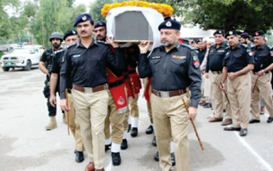
In rural areas, Basic Health Units (BHUs) suffer from chronic shortages of medicines and staff. Public health initiatives are perilous; police officers have been killed while escorting polio vaccination teams, and KP accounted for 19 of Pakistan’s 30 polio cases in 2025 (Dawn, 2025e; Tribune, 2025c).
Erosion of Institutional Trust
Public trust in state institutions has severely eroded. Around 52 per cent of residents believe development funds are routinely misappropriated, and even 71 per cent of PTI supporters back formal investigations into alleged corruption in projects initiated under the party’s rule (Gallup Pakistan, 2025).
The formal justice system is widely seen as inefficient and biased, with 70 per cent of citizens stating that courts take too long, leading to a resurgence of informal jirga systems, which 84 percent of respondents believe deliver fairer verdicts (Gallup Pakistan, 2025).
Protests for Political Rehabilitation vs. Public Uplift
The protest strategy championed by the KP leadership throughout 2025 is perceived by a majority of citizens as serving partisan interests rather than public welfare.
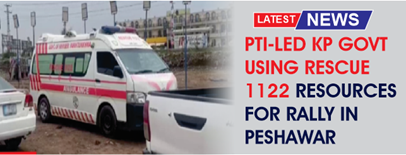
Public Rejection of Protest Politics
Despite being framed as movements for “rights” and “justice,” public fatigue is evident. Surveys show that over 53 per cent of KP residents are unwilling to join future PTI-led protests, viewing them as politically motivated (Geo TV, 2025; The Current, 2025). A significant 60 per cent believe the government neglects governance for protests, a sentiment shared by 48 per cent of PTI voters themselves (Gallup Pakistan, 2025).
Authorities have frequently met these demonstrations with internet shutdowns and arrests, contributing to a decline in civil liberties scores for Pakistan (Freedom House, 2025).
The Economic and Social Toll
The economic disruptions caused by shutdown strikes and highway blockades disproportionately harm daily wage earners, traders and students. The calculus is clear: the political rehabilitation of the party’s national leadership is being prioritised over the economic and social rehabilitation of KP’s populace. This perception is reinforced when calls for protests are amplified even as unemployment soars and schools remain dysfunctional.
The Betrayal of Ex-FATA: Merger Without Inclusion
Seven years after its merger, the former FATA region stands as the most glaring symbol of failed promises and institutional neglect.
The cornerstone of the merger — a federal pledge of Rs100 billion annually for 10 years in development funds — remains largely unfulfilled. Only Rs138 billion has been disbursed over seven years, leading to a near-complete standstill in development projects (Dawn, 2025). The neglect became so acute that in June 2025, the federal government had to issue a Rs35.9 billion emergency bailout package to prevent the total collapse of essential services in the tribal belt (Policy Wire, 2025).
Security and Administrative Vacuum
The security and administrative vacuum has been filled by militants and outdated systems. Militant groups run parallel shadow administrations in parts of the southern districts, openly collecting extortion (Armed Conflict Location & Event Data Project [ACLED], 2025).
Police reforms are incomplete, with 26,000 former tribal security personnel integrated into the KP police but left without proper training, uniforms, or arms (The Diplomat, 2025).
The judicial infrastructure is virtually absent, forcing residents to rely on the very traditional jirga systems the merger was supposed to replace. This systemic abandonment has not only betrayed the local population but has also allowed the region’s instability to fuel the broader security crisis engulfing the entire province.
The Unabated Security Meltdown
KP is the undisputed epicentre of violence in Pakistan. Data from the Centre for Research and Security Studies (CRSS) indicates that in the third quarter of 2025 alone, 901 fatalities were recorded in KP — a 46 per cent surge from the previous quarter. The province accounted for a staggering 71 per cent of all terrorism-related fatalities nationwide during this period (CRSS, 2025). Militant groups have effectively exploited the political and administrative vacuum to expand their influence.
Pervasive Corruption and Human Rights Concerns
Public perception of corruption is worsening, with 48 per cent of residents believing it has increased in government departments (Gallup Pakistan, 2025a). A national survey ranked the police as the most corrupt institution, with 77 per cent dissatisfied with anti-corruption efforts (Transparency International Pakistan, 2025). Human rights issues are severe, with reports documenting 267 cases of violence against transgender persons over five years in KP, resulting in only one conviction (Human Rights Watch, 2025).
Conclusion: Governance as a Casualty
The governance record of Khyber Pakhtunkhwa in 2025 serves as a stark cautionary tale. A provincial government, elected with a strong mandate, has become overwhelmingly consumed by national political warfare, internal party strife and the logistics of protest.
The metrics are clear and damning: 4.7 million children are out of school, a flagship health scheme is buried under Rs18 billion in debt, and the province suffers over 70 per cent of the country’s terrorism fatalities.
The high-level political change in October was a tacit admission of these failures but was itself a product of the same crises it sought to address. For the people of KP, the “real issues” are not abstract political battles in Islamabad but the concrete realities of safety, health, education and justice.
On these fronts, 2025 has been a year of perilous neglect. The province has been used as a stage for a broader national conflict, and its citizens are paying the price of admission through diminished security, broken services and forsaken opportunities.