Hassan Khan
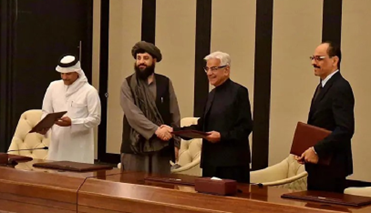
Relations between Pakistan and Afghanistan have always been difficult. Over the years, they have moved between limited cooperation and open tension. Today, ties between the two neighbors are at one of their worst points. Borders are closed, trade has stopped, and official communication is suspended. Islamabad and Kabul, once seen as closely linked, now require third-party mediation just to begin talks.
The best way out of this deadlock is direct dialogue, even if it takes many rounds. History shows that neighbors cannot afford to refuse talks. When the dialogue stops, hostile actors benefit and instability grows.
The situation has become increasingly fragile. The return of militancy, repeated border incidents and deep political mistrust have raised fears of a wider confrontation. Pakistan’s strikes on militant hideouts inside Afghanistan have further worsened tensions. While a formal war has not started, continued cross-border attacks, military responses and diplomatic stalemates have created conditions similar to an ongoing conflict. In such an environment, dialogue is no longer optional; it is essential.
UN Recognition of Afghanistan’s Security Crisis
The international community, especially the United Nations, has long recognized Afghanistan as a major regional concern. UN reports consistently highlight the country’s weak security situation, worsening humanitarian crisis, economic collapse and the presence of militant groups with cross-border reach.
In its latest report, the UN Security Council assessed Afghanistan’s security environment and noted that the ISIS-K threat continues despite claims of improved stability. While some level of internal order exists, the report warned of serious security threats inside Afghanistan.
According to the report, Afghan authorities have suppressed but not eliminated ISIS-K. The group still poses serious threats within Afghanistan and beyond. The report also stated that Tehrik-e Taliban Pakistan (TTP) has carried out multiple attacks inside Pakistan from Afghan territory, leading to border tensions, loss of life and disruption of trade.
The Security Council rejected claims by Afghanistan’s de facto authorities that no terrorist groups operate from Afghan soil, calling such statements “not credible.” Another UN monitoring report concluded that the Afghan Taliban have created a permissive environment for various militant groups. Regional countries have repeatedly warned that terrorism originating from Afghan territory remains a major source of instability.
For Pakistan, this UN recognition supports a long-standing concern: instability in Afghanistan does not remain confined within its borders. Militancy, refugee flows, and illegal trade directly affect Pakistan’s security and economy. The UN’s continued engagement reflects a broader understanding that unresolved Afghan issues can escalate regional tensions, particularly between Kabul and Islamabad.
Militancy and Mutual Distrust
One of the most sensitive issues in Pak-Afghan relations is the presence of militant groups operating from Afghan territory. Pakistan identifies TTP, also referred to as Fitna-al-Khawarij, as its primary security threat. Pakistani officials claim these groups use Afghan soil for training, planning and launching attacks.
Pakistan’s main demand from the Afghan authorities is clear: prevent FAK from operating against Pakistan from Afghan territory. Islamabad believes that the Afghan Taliban provide moral and financial support to the group and allow training centres and sanctuaries near the border.
The Afghan Taliban strongly deny these accusations. They insist Afghan soil is not used against any neighboring country and accuse Pakistan of politicizing security concerns. However, continued attacks inside Pakistan and UN findings have deepened mistrust. This gap between claims and denials has made confidence-building extremely difficult.
The latest UN Security Council report described Taliban denials as not credible. UN Secretary-General António Guterres has also urged Afghan authorities to ensure that no terrorist groups use Afghan territory to attack Pakistan or other neighbors. He emphasized that preventing cross-border terrorism is essential for regional stability.
Using Tensions to Distract from Internal Problems
Many analysts believe that rising tensions with Pakistan also serve another purpose for the Afghan Taliban: diverting attention from internal challenges. Afghanistan is facing severe economic hardship, international isolation, unemployment, food insecurity and growing public dissatisfaction.
By adopting a confrontational posture toward Pakistan—through harsh statements or border incidents—the Taliban leadership may attempt to shift public focus away from governance failures. Portraying Pakistan as an external enemy can help rally domestic support, but this strategy carries long-term risks. Continued hostility reduces chances for trade, regional cooperation and international legitimacy.
Economic Collapse and the Drug Economy
Since the withdrawal of international forces and the freezing of Afghan assets, Afghanistan’s economy has suffered badly. In this vacuum, illicit activities especially narcotics production and smuggling have historically expanded.
Although the Taliban claim to have acted against poppy cultivation, multiple assessments suggest that drug-smuggling networks remain active. Pakistan and other regional states believe that narcotics profits not only sustain parts of the Afghan economy but also finance militant groups, worsening cross-border insecurity.
Narco-smuggling Poses A Dual Threat:
It Fuels Crime and Militancy While Further Damaging Trust Between Pakistan and Afghanistan.
The Only Way Forward: Dialogue
Given the high cost of continued hostility, dialogue remains the only realistic path forward. Pakistan has repeatedly called for structured talks, intelligence cooperation and effective border management. Wether bilateral or facilitated by regional and international actors, dialogue aims to reduce tensions and prevent misunderstandings from escalating.
For meaningful progress, both sides must move beyond denial and blame. Afghanistan must ensure its territory is not used for militant activities, while Pakistan must balance security actions with diplomacy. The UN and the international community can help by encouraging talks, offering mediation and linking economic support to regional stability.
The Pak-Afghan conflict is not a conventional war but a dangerous cycle of mistrust, proxy violence and political maneuvering. UN recognition of Afghanistan’s instability underlines the seriousness of the situation. Without sustained dialogue and cooperation, both Pakistan and Afghanistan risk prolonged instability something neither country can afford in an already volatile region.