Pakistan has witnessed marked deterioration in its internal security environment in recent years, particularly in Khyber Pakhtunkhwa (KP) and the erstwhile Federally Administered Tribal Areas (FATA).
Security personnel and civilians alike are being targeted in this renewed wave of terrorism, receding many of the gains achieved through earlier counter-terrorism campaigns.
The resurgence of terrorism has compelled the Pakistani state to recalibrate its security strategy. Instead of relying solely on defensive measures, the country has increasingly adopted a proactive and intelligence-driven approach aimed at dismantling militant networks, denying them operational space and preventing large-scale attacks. This evolving strategy encompasses targeted intelligence-based operations (IBOs), precision engagements, enhanced border security measures, and, where deemed necessary, strikes against militant sanctuaries located across the border in Afghanistan.
A major factor cited by Pakistani authorities in explaining the worsening law-and-order situation is the availability of safe havens for Fitna al-Khawarij(FAK) and other anti-Pakistan militant groups inside Afghanistan.
These groups exploit Afghan territory for recruitment, ideological indoctrination, training, logistical support and operational planning before infiltrating into Pakistan to conduct attacks. Pakistani officials have repeatedly asserted that militant commanders involved in orchestrating attacks on Pakistani soil continue to operate from locations beyond the country’s western border.
The issue has become one of the most contentious aspects of Pakistan-Afghanistan relations. Pakistan maintains that the failure to dismantle these sanctuaries has emboldened militant organisations and facilitated their operational resurgence. Afghan authorities, however, have consistently rejected these allegations, arguing that Afghanistan does not permit its territory to be used against any other country, describing Pakistan’s security challenges as an internal matter.
Despite these diplomatic disagreements, the persistence of cross-border attacks has heightened tensions between the two neighbouring states and has significantly influenced Pakistan’s current counter-terrorism posture.
The deteriorating security landscape has been reflected in a steady increase in militant attacks across several districts of Khyber Pakhtunkhwa and Balochistan. Security checkpoints, police stations, military convoys and civilian gatherings have repeatedly come under attack.
The evolving nature of the threat has required security institutions to move beyond conventional military deployments and adopt more agile, intelligence-led responses capable of neutralising emerging threats before they materialise.
The Resurgence of Violence
Data compiled by the Centre for Research and Security Studies (CRSS), an Islamabad-based independent non-profit think tank, shows a sharp escalation in violence over the past four years and underscores that the current security crisis is part of a broader regional trend.
2022: The Beginning of the Surge
Pakistan recorded 512 militant incidents nationwide, resulting in 980 fatalities and injuries to 750 individuals. Khyber Pakhtunkhwa emerged as the most affected province, accounting for 313 attacks, which claimed 633 lives and left 420 people injured.
2023: Violence Intensifies
The following year witnessed a significant escalation. Around 789 incidents of violence were reported nationwide, causing 1,533 fatalities and 1,462 injuries. Khyber Pakhtunkhwa alone accounted for 458 attacks, indicating a widening operational footprint of militant groups.
2024: One of the Deadliest Years
The security situation deteriorated dramatically in 2024, making it one of the most violent years in recent memory. Across Pakistan, 1,166 incidents were recorded, resulting in 2,546 deaths and 2,267 injuries.
Khyber Pakhtunkhwa remained the epicentre of the crisis, witnessing 693 attacks that claimed 1,616 lives and injured 1,037 people.
2025: The Upward Trajectory Continues
Rather than stabilising, the trend accelerated further in 2025. Pakistan experienced 1,272 militant incidents, leading to 3,417 fatalities and 2,134 injuries.
Khyber Pakhtunkhwa recorded 795 attacks, leaving 2,331 people dead and 1,206 injured, reinforcing concerns that militant groups had regained substantial operational capability. The progression of violence over these four years highlights the extraordinary scale of the challenge confronting Pakistan’s security institutions. Between 2022 and 2025, national incidents more than doubled, while fatalities increased more than threefold. Khyber Pakhtunkhwa consistently bore the heaviest burden of this renewed insurgency.
The Changing Face of Militancy
Specialised data from the Khyber Pakhtunkhwa Counter-Terrorism Department (CTD) further illustrates how militant tactics have evolved beyond conventional attacks.
Between January 2024 and April 6, 2026, the province recorded a staggering 2,359 terrorist activities, reflecting both the intensity and diversification of militant operations. The breakdown of these incidents reveals the operational methods increasingly employed by militant groups:
- 1,265 incidents of direct firing
- 365 Improvised Explosive Device (IED) blasts
- 244 targeted killings
- 181 hand grenade attacks
- 125 kidnappings for ransom
- 22 suicide bombings.
Most notably, militant organisations have increasingly embraced emerging technologies to enhance their capabilities.
During the same period, authorities documented 156 drone attacks, signalling a new and troubling phase in Pakistan’s security challenge. Of these, 80 occurred in 2025, while 77 were recorded during the first three months of 2026 alone, indicating both the growing accessibility of drone technology and militants’ willingness to employ it for reconnaissance, intimidation and offensive purposes.
This shift towards technologically enabled violence illustrates the adaptive nature of contemporary militant networks.
The threat confronting Pakistan is no longer limited to traditional insurgent tactics; it now encompasses sophisticated methods that demand equally innovative responses from intelligence, law enforcement and military institutions.
Targeting Militant Sanctuaries
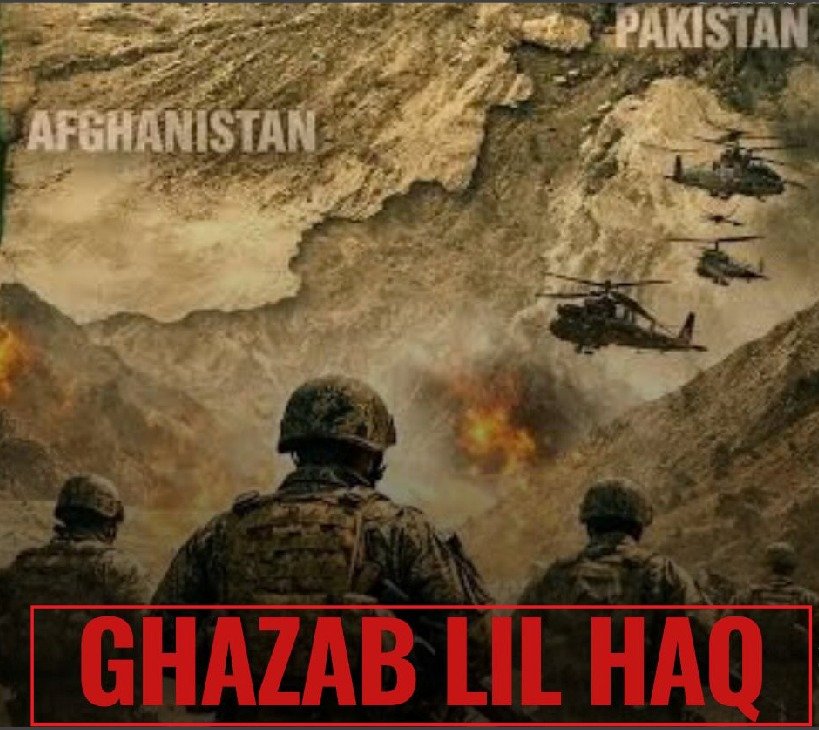
Against the backdrop of persistent cross-border terrorism, Pakistan initiated Operation Ghazab-lil-Haq, described by officials as a calibrated military response aimed at neutralising militant infrastructure facilitating attacks against Pakistan.
The operation represented a significant shift in strategic thinking. Rather than remaining confined to reactive responses following attacks, Pakistan sought to deny militants the ability to organise, regroup and plan operations from what it described as external sanctuaries.
According to official accounts, the operation targeted:
- Militant hideouts and training facilities
- Command-and-control centres
- Weapons and ammunition depots
- Communication hubs
Logistical networks supporting insurgent activityFacilities allegedly used for planning attacks against Pakistan
Pakistani authorities characterised these strikes as limited, precise and necessary for national defence. The stated objective was not territorial escalation but the disruption of terrorist capabilities that posed an immediate threat to Pakistan’s security.
Operation Ghazab-lil-Haq therefore symbolised a transition from strategic restraint to a more proactive doctrine designed to impose costs on groups exploiting cross-border safe havens.
The Cornerstone of Counter-Terrorism
Parallel to these measures, intelligence-based operations have emerged as one of the most critical components of Pakistan’s counter-terrorism framework.
Unlike large-scale military offensives involving prolonged troop deployments, IBOs rely on actionable intelligence gathered through human intelligence networks, technical surveillance, signals intelligence, inter-agency information sharing, real-time reconnaissance, and local law-enforcement inputs.
These operations enable security forces to conduct focused actions against specific militant cells, facilitators and commanders while limiting disruption to normal civilian life.
Over recent years, hundreds of such operations have reportedly been conducted across affected regions. These engagements have led to the elimination of numerous militants and the recovery of weapons, explosives, communication equipment and propaganda material.
The increasing reliance on IBOs reflects an understanding that contemporary militant threats are fluid and decentralised. Small cells operating independently require precision responses rather than broad conventional campaigns.
Minimising Civilian Harm
A defining characteristic of Pakistan’s recent counter-terrorism approach has been its emphasis on avoiding civilian casualties.
Security officials have repeatedly maintained that operations undergo extensive planning and intelligence verification to distinguish militant targets from civilian populations.
Measures employed to minimise collateral damage include:
- Multi-layered intelligence validation
- Continuous target surveillance
- Precision-guided engagements
- Careful timing of operations
- Selection of isolated targets where feasible
- Real-time operational oversight
Officials argue that adherence to these principles reflects both strategic necessity and humanitarian responsibility.
Protecting civilian lives is viewed not merely as a moral obligation but also as a critical element in preventing extremist groups from exploiting public grievances for recruitment and propaganda purposes.
Bannu: A Critical Theatre of Counter-Terrorism
Bannu, among the districts most affected by the renewed wave of militancy, occupies a particularly significant position.
Located near former tribal areas and historically utilised militant transit routes, the district has suffered from repeated attacks targeting security personnel and public infrastructure. The area has consequently emerged as a focal point for intelligence-led counter-terrorism activities.
Security forces have conducted multiple operations in and around Bannu aimed at preventing militant infiltration, disrupting planned attacks, eliminating active terrorist cells, recovering weapons and explosives, and strengthening local security mechanisms.
The recurring nature of militant activity in Bannu underscores the strategic importance of the district within Pakistan’s broader security landscape.
Other Significant Engagements
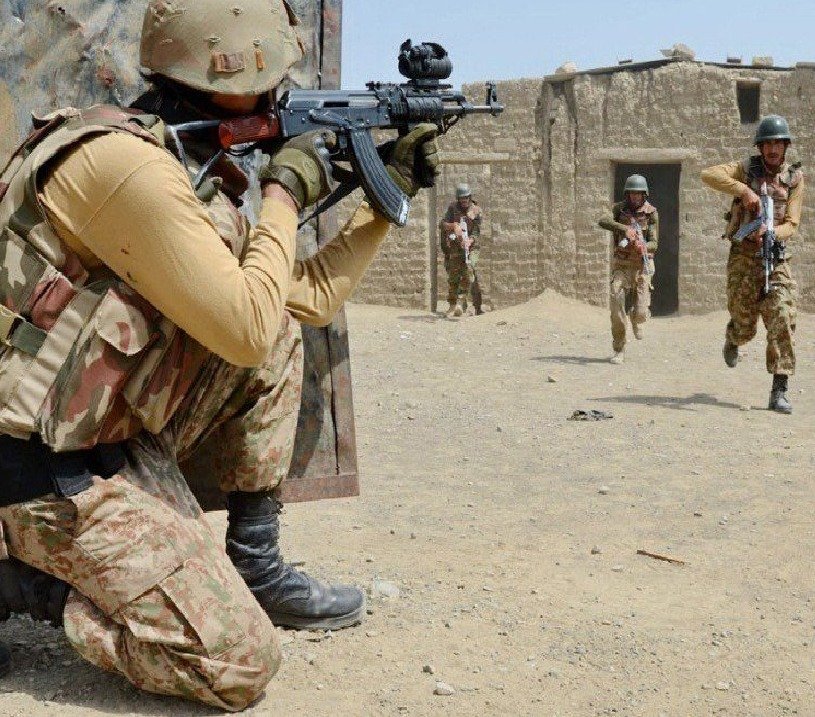
Major engagements have also occurred in North
Waziristan, South Waziristan, Bajaur, Khyber, Kurram, and border sectors including Ghulam Khan.
These operations have involved both defensive actions against infiltration attempts and offensive engagements targeting militant concentrations. Collectively, they demonstrate the broad geographic spread of contemporary security challenges and the necessity of maintaining sustained pressure on militant networks across multiple fronts.
Strategic Implications
Pakistan’s evolving counter-terrorism doctrine reflects lessons learned from previous campaigns against insurgency.
- The strategy increasingly emphasises:
- Pre-emption over reaction
- Intelligence integration
- Precision targeting
- Inter-agency coordination
- Border management
- Civilian protection
- Sustained operational pressure
Security officials argue that the objective is not merely the elimination of individual militants but the systematic degradation of the organisational ecosystems that sustain extremist violence.
At the same time, the persistence of cross-border militancy demonstrates that military measures alone cannot entirely resolve the challenge. Lasting stability will require effective regional cooperation, strengthened governance, socioeconomic development in vulnerable areas, and the continued
resilience of local communities affected by violence.
Pakistan’s worsening law-and-order situation has prompted a comprehensive recalibration of its counter-terrorism strategy. Faced with a resurgence of militant violence, rapidly evolving militant tactics, and allegations of external sanctuaries facilitating attacks, the state has adopted a multi-layered response centred on intelligence-based operations, targeted engagements, enhanced border security, and precision strikes against militant infrastructure.
Operations such as Ghazab-lil-Haq and sustained intelligence-led actions in Bannu, Waziristan, Bajaur, Khyber, Kurram, and other sensitive regions illustrate Pakistan’s determination to deny extremist groups the operational space required to threaten national security.
While the challenge remains complex and politically sensitive, Pakistani security institutions maintain that sustained, calculated and precise pressure on terrorist networks remains indispensable for restoring public confidence, safeguarding citizens, and ensuring long-term stability in the country.